


MUZZLES FOR SMALL DOGS
Why even small dogs need a muzzle
My dog does not need a muzzle. This is often heard when it comes to the subject of muzzle or muzzle for the small dog. But is it really so?
What is the most important thing about a muzzle?
- A muzzle protects your small dog and others from potential dangers.
- It prevents conflicts with other dogs and protects against uncontrolled bites.
- It is to protect other fellow human beings and children.
- The muzzle is suitable for everyday use and does not hinder the dog’s movements.
- It prevents the dog from ingesting unwanted food or poisoned bait.
- The dog can breathe and pant normally despite the muzzle in order to regulate its body temperature.
What should you look for when buying a muzzle for a small dog?
- The fit is of great importance to ensure that the muzzle fits correctly and comfortably. A muzzle that is too loose could slip and not fulfill its purpose, while a muzzle that is too tight would be uncomfortable for the dog and could make it difficult for it to breathe.
- The weight of the muzzle should be light so as not to put unnecessary strain on the small dog. A muzzle that is too heavy could exhaust the dog and make it uncomfortable to wear, especially during longer walks or activities.
- A foodbrake is very important, if your small dog tends to pick up everything that is lying around. This prevents the dog from ingesting unwanted objects or potentially dangerous substances that could endanger its health.
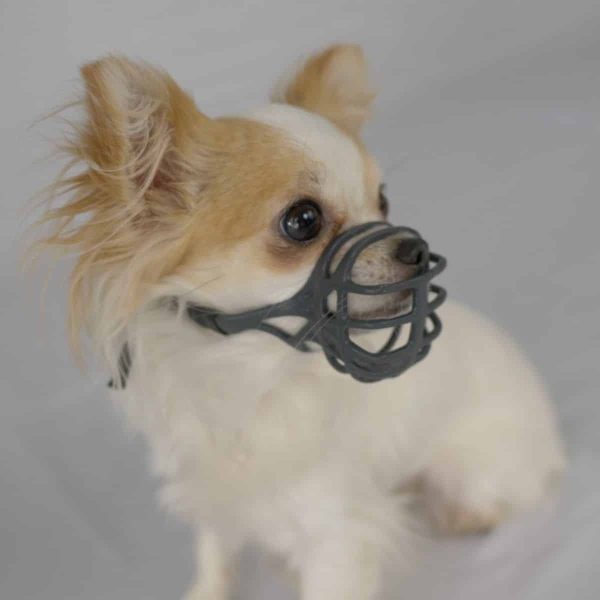
What to consider with my small dog breed?
// Muzzle for dwarf spitz / Pomeranian
The Dwarf Spitz or Pomeranian is a lively and affectionate dog breed from Germany that enjoys great popularity worldwide.
A muzzle for a dwarf spitz should be very light in weight. It is important that the muzzle is well centered on the nose of the dwarf spitz and that the muzzle has the correct width. It is crucial for the wearing comfort of the dwarf spitz that the muzzle is light. For the very active dogs, a slightly sturdier design is recommended so that the muzzle lasts a long time. A food guard is a good idea here, as poison killers can have serious consequences in such small dogs, even in small amounts.
// Muzzle for Shih Tzu
The Shih Tzu is a smart, open-minded dog originally from Tibet. He is always friendly towards his humans. Often a little reserved towards strangers. But the basic attitude is pride.
Depending on the dog’s current hairstyle, a muzzle he can wear trimmed or long-haired is not so easy to find.
The curly nose and long hair hanging down require a certain depth of muzzle without the dog being able to pull it off himself. Individually made and precisely matched to the measured values of the respective dog is often the means of choice here. We from the Limuzz team are happy to offer you our help to make sure that the measured values really fit. Send us measurement photos (dog with ruler/measurement tape) to support@limuzz.com.
// Muzzle for Maltese
The Maltese is a happy and affectionate family dog that loves to explore.
He is a bright and self-confident contemporary.
In the case of a muzzle, as with all small breeds of dogs, special attention should be paid to the weight. The head shape and especially the many hairs on the muzzle make it not easy to find something suitable. It is important that the muzzle fits well and is wide enough to accommodate the hair. A Limuzz can be made to the exact individual width and length the dog needs.
// Yorkshire Terrier Muzzle
Despite its small size, the Yorkshire Terrier is a very courageous and self-confident dog. A typical terrier, he is bright and certainly not always a cute lap dog. The Yorki does not lack self-confidence either.
Especially with such breeds it is useful to accustom him to a muzzle early, so that it can be used, if necessary, without stress for the dog. Especially in situations with other dogs or even with children, it makes sense to protect the Yorkshire Terrier from himself by protecting others from him.
The short muzzle and hair are a challenge for the muzzle. The muzzle should be strong and light but not restrict the dog. Especially with the activity level of a terrier, the space for panting is enormously important. And last but not least, the muzzle should be very light.
// Muzzle for dwarf pincher
The Miniature Pinscher has a strong urge to move. Otherwise, he is curious, smart and open-minded. He is not the biggest but a very persistent watchdog with a low irritation threshold.
When it comes to a muzzle, the head shape is crucial here. The relatively long, narrow nose requires a muzzle that allows the active dog to open the muzzle deep enough. At the same time, the dwarf pincher has a rather narrow nose. The muzzle should not be too tight here, otherwise it may cause pressure points. Depending on how pronounced the guarding behavior is, we recommend a Limuzz PRO with feeding protection. This is flexible and prevents anyone from getting hurt in case of friction.
// Muzzle for Havanese
The Havanese is a friendly family dog. This makes him well suited as a “beginner dog”.
The good-natured nature often leads to the fact that a suitable muzzle is dispensed with.
However, as a protection against poisonous baits or simply because the muzzle is mandatory in means of transport or in public spaces, a muzzle should always be with you.
It is important that the weight of the muzzle is low. The short but wide hairy muzzle of this breed often make finding a suitable muzzle a challenge. Customized, and well-fitting, the Limuzz is a perfect solution here.
// Muzzle for West Highland Terrier
Known from television commercials, this breed is always. A typical terrier, the Westi is bright and has a tendency to be independent. He also has a strong hunting instinct.
With a muzzle here, in addition to the ideal size, safety is crucial. On the one hand, there is the question of what the Highlander finds while in hunting mode. Here, a sturdy food guard may be necessary to keep the dog protected. And most importantly, for a dog that might be darting in the woods, the muzzle should be a striking color. (We recommend orange here) This makes it obvious that the dog is secured and cannot harm any animal and it can be recognized from a distance when a signal color shines out of the undergrowth.
// Muzzle for Maltipoo
The Maltipoo is a cross between a Maltese and a Poodle. The reason for this mix was to breed an “allergy friendly” dog. The Maltipoo is an uncomplicated and robust dog breed.
The main purpose of a muzzle here is to protect the dog. The PRO version of the Limuzz with food protection is worth considering here. The muzzle should well enclose the many hairs on the muzzle of the dog. However, this should not restrict the dog. It may well be that the muzzle here is somewhat wider. The necessary depth so that the good companion dog gets enough air when he is on the road with his mistress must be taken into account.


